
Cornell Places 2nd at the MIT Real Estate Case Competition
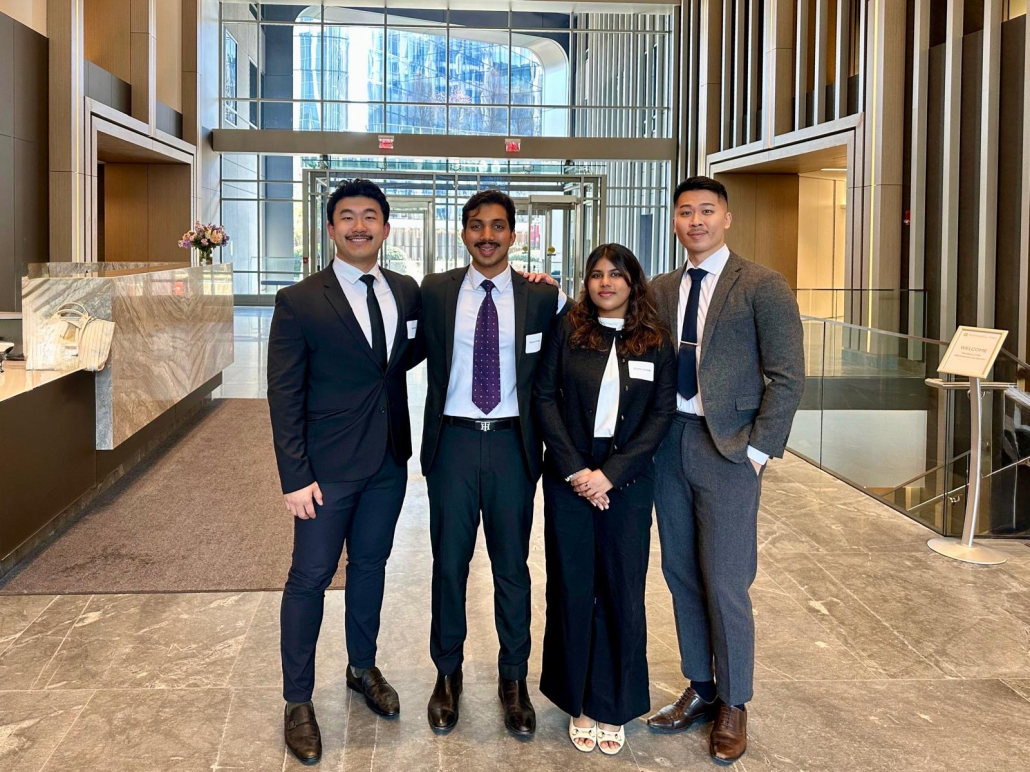
A graduate team of Baker Program and Nolan MMH students competed on one of Washington, D.C.’s most consequential redevelopment sites and brought home a 2nd-place win from one of the most prestigious real estate competitions in the world.
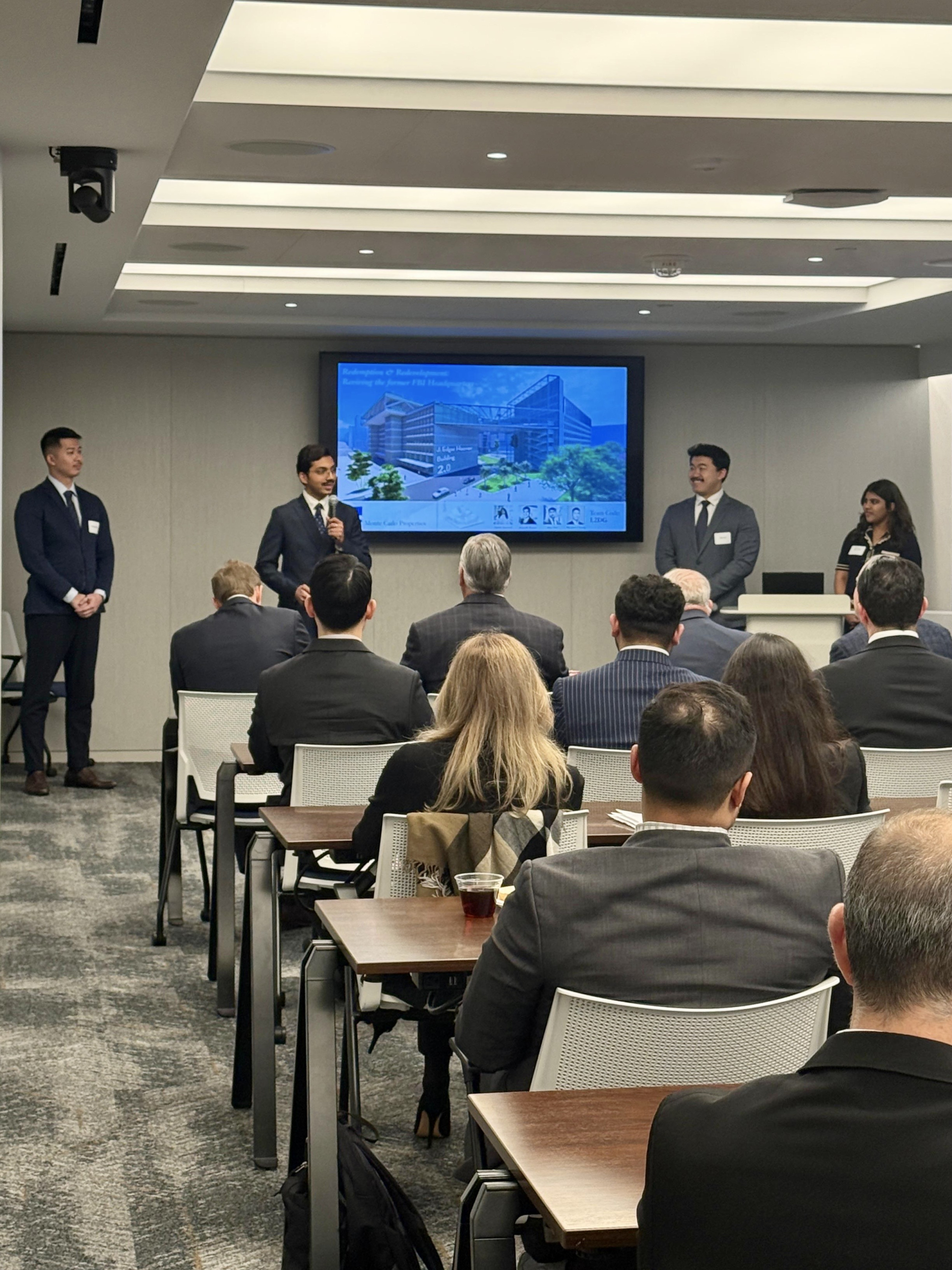
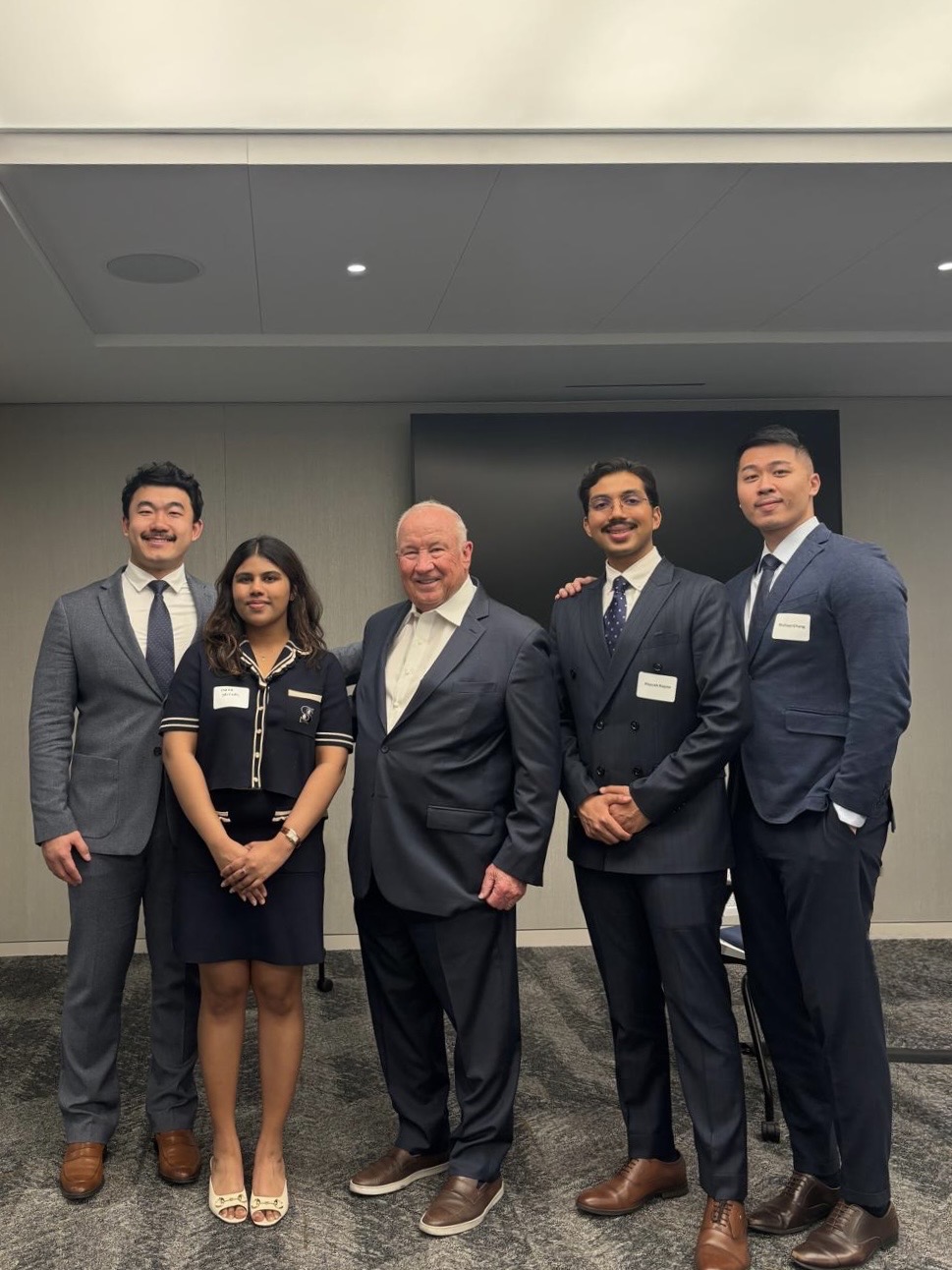
Since its founding in 2009, MIT’s CASE Competition has drawn over 1,000 participants from 30 graduate programs. It is, by any measure, one of the most rigorous and selective graduate real estate competitions in the world. This year, Cornell entered for the first time as a semi-finalist. A team of four graduate students, Aayush Kapse (Baker Y2), Michael Chang (Baker Y2), Sneha Jaiswal (Nolan MMH Y1), and Alex Sun (Baker Y1), not only made the cut but also advanced through to the final three.
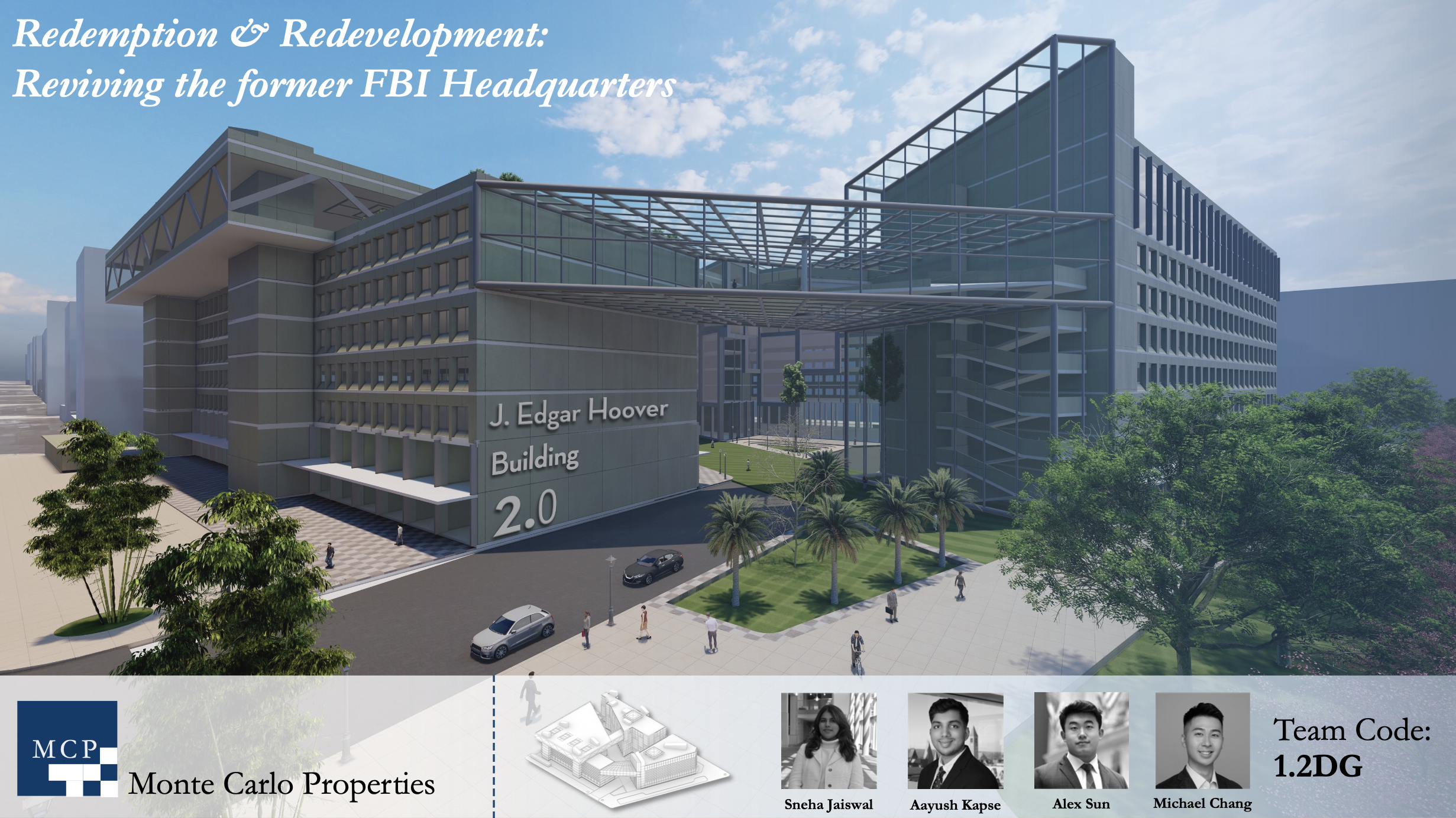
The Case: The J. Edgar Hoover Building
This year, teams were asked to develop a credible real estate acquisition and development proposal for one of the most prominent, politically sensitive, and architecturally complex redevelopment opportunities in the country: the J. Edgar Hoover Building, the FBI’s former headquarters. Containing over 2,800,876 square feet of interior space, the brutalist landmark occupies a full city block on Pennsylvania Avenue in Washington, D.C.
The Cornell team, competing under the firm name Monte Carlo Properties, approached it as a full-scale repositioning challenge. Their proposal integrated a mixed-use program comprising office, two hotels, retail, and parking, alongside four government incentive structures, development phasing, and a capital strategy designed to withstand institutional scrutiny. The case was prepared in collaboration with Brookfield Asset Management, one of the world’s leading real estate private equity firms, and was judged by senior industry professionals.
“The case required us to think through land use, urban planning, market demand, public realm, deal structure, and financial feasibility all at once. Every decision had to work on multiple levels — not just architecturally or financially.” — Aayush Kapse, ’26
A Team Built for Success
Cornell’s team consisted of four students from the Baker Program and Nolan MMH. Aayush Kapse led the development business plan and fund strategy, drawing on his background in private equity and his experience as former President of Cornell’s Associate Real Estate Council. Michael Chang served as the team’s quantitative anchor, owning the financial model and translating its outputs into a clear investment narrative. Sneha Jaiswal brought an interdisciplinary perspective rooted in architecture, hospitality, and placemaking, shaping the proposal’s design logic and visual storytelling. Alex Sun drove investor relations, financial incentives analysis, and the team’s communication strategy.
“We knew each other would work through the night during mission-critical hours. That trust is unlike anything else in terms of allowing you to hyper-focus and go deep on each part of the case.” — Alex Sun, ’27
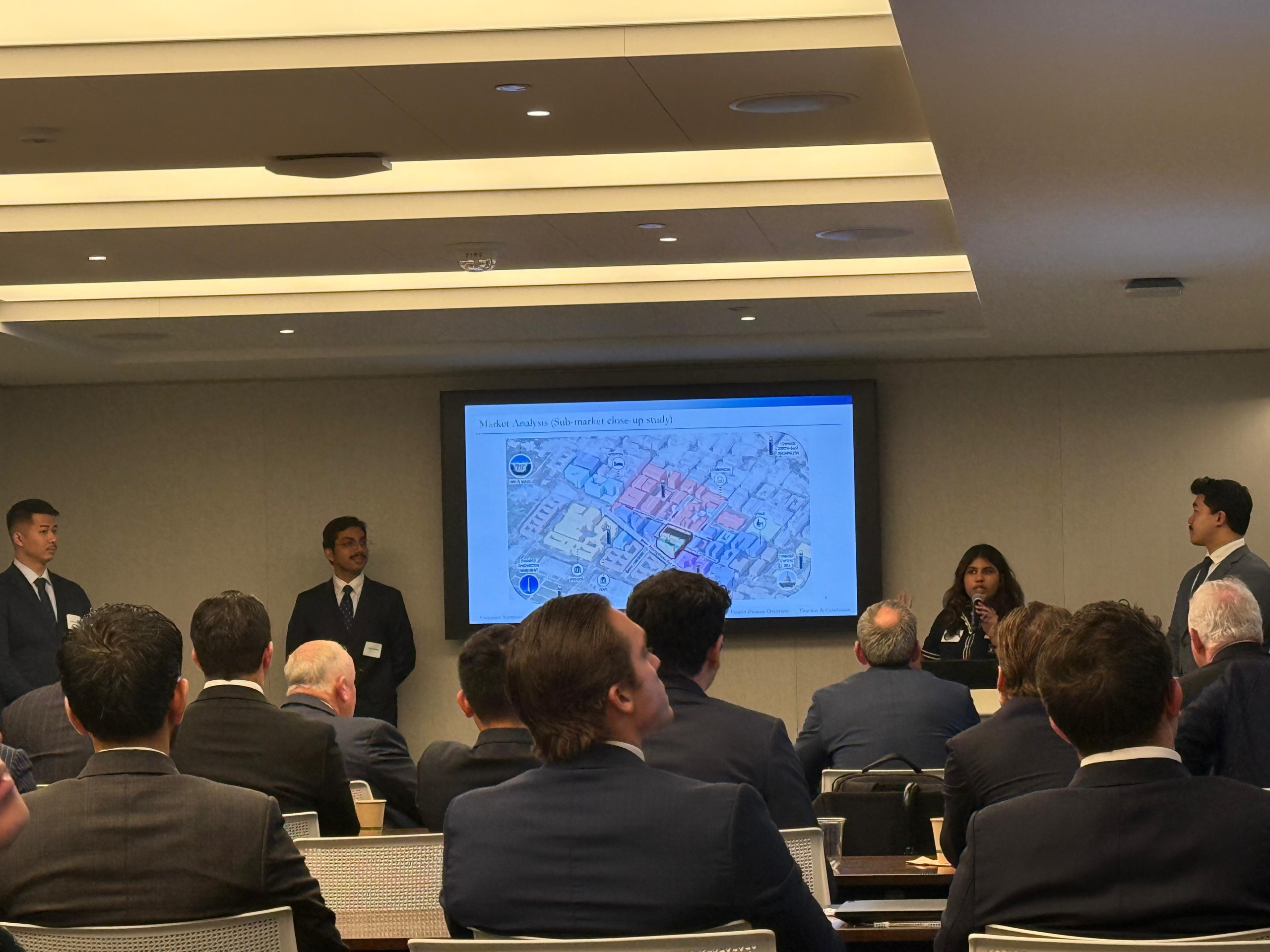
Notably, this is the same core team that represented Cornell at UT Austin’s National Real Estate Challenge in 2025. The meticulous training forged a level of trust and operational rhythm that carried through the competition, including during the team’s live Q&A sessions, where they stole the spotlight.
The Training that Made This Possible
 The team consistently credited Cornell’s interdisciplinary environment as foundational to their performance. Baker’s financial and development curriculum helped the team underwrite a project of this scale. Nolan’s focus on hospitality, design, and the user experience inspired the team to build a proposal that people could understand and believe in, beyond a feasibility assessment or stress test.
The team’s strategic decisions were directly influenced by Professor Daniel Lebret’s classes on Financial Modeling, Professor Chris de Mestre’s Private Equity course, Professor Mark Apker’s Real Estate Development cases, and Professor Cody Allen Danks Burke’s Transactions and Deal Structuring syllabus. Michael credited the Baker curriculum for enabling him to build a flexible, institutional-quality pro forma. Alex added that Professor Andrew Quagliata’s work on presentation skills was pivotal for the competition. Sneha highlighted the influence of Professor Lisa Chervinsky and the broader Nolan community in developing her ability to incorporate hospitality thinking and spatial logic into a real estate development context.
“This experience positively affirmed my ambition to work in roles where development strategy and user experience cohesively coexist — and not dominantly differ.” — Sneha Jaiswal, ’26
Advice for Students Considering a Case Competition
 For students contemplating a case competition, this team’s experience demonstrates that Cornell’s real estate program equips you to excel at the highest level. When asked for advice to a first- or second-year student considering entering such an event, the team’s answer was unanimous: go for it and don’t wait until you feel completely prepared:
“Case competitions are one of the best ways to accelerate your learning. They force you to work under pressure, make decisions with incomplete information, and translate classroom knowledge into something that feels much closer to actual industry work.” — Aayush Kapse, ’26
“Don’t shy away because you think you lack a particular skill — that’s exactly what a team is for. Strong teams need people who can think about design, storytelling, and market positioning, not just finance.” — Sneha Jaiswal, ’26
“Own a role and go deep — but find a team that pushes you. Being surrounded by teammates who are highly driven and accountable elevates the quality of everything.” — Michael Chang, ’26
The Cornell Real Estate Council is proud to have supported Aayush, Michael, Sneha, and Alex throughout their journey, alongside the Rubacha Department of Real Estate and the Center for Real Estate Finance at Nolan. Cornell’s first appearance in the MIT Real Estate Case Competition semi-finals is a significant achievement, highlighting the strength of its programs, faculty, and community that supported this team.